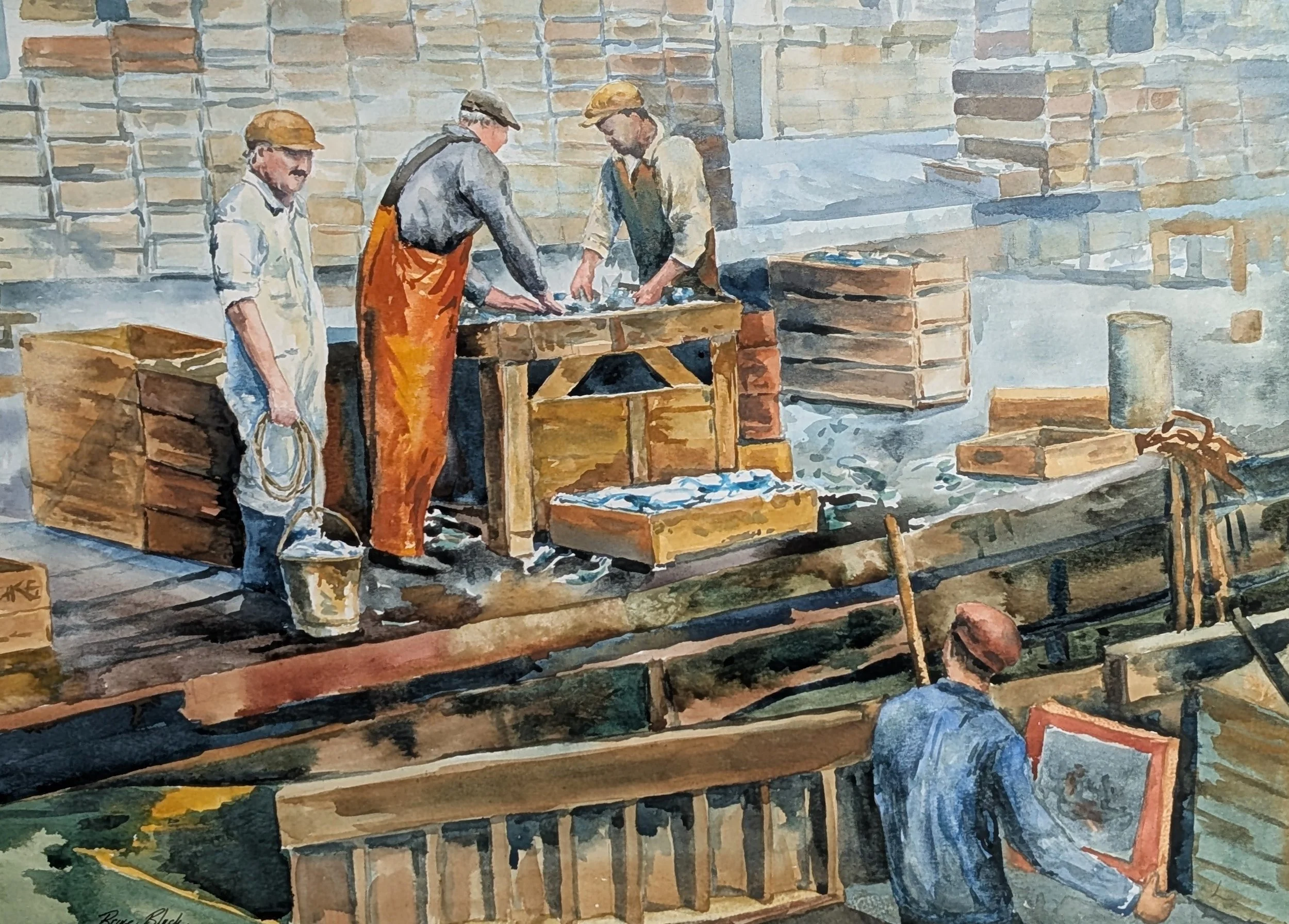
Every great painting, whether it is a quiet watercolor landscape or a dramatic oil still life, is built on a foundational visual language. When artists first start studying composition, two questions inevitably come up: What are the elements of art? and What are the principles of design?
While the terms are often used interchangeably, understanding the distinction between the two is what elevates a good painting into a masterful one. I have put together a comprehensive slideshow below to walk you through these concepts visually, but let's break down the core definitions.
The Elements of Art: Your Visual Vocabulary Think of the elements of art as your raw ingredients. You cannot create an artwork without them. When we talk about the building blocks of an image, we are referring to these seven fundamental tools:
Line: The continuous mark made on a surface, guiding the viewer's eye.
Shape: An enclosed two-dimensional area defined by lines or color changes.
Form: The three-dimensional quality of an object, giving it depth and volume.
Space: The illusion of depth and the physical area around, between, or within subjects.
Texture: The perceived surface quality of a work—how it looks like it would feel.
Color: The specific hues, intensities, and temperatures used to evoke mood.
Value: The lightness or darkness of a color, crucial for defining form and dramatic lighting.
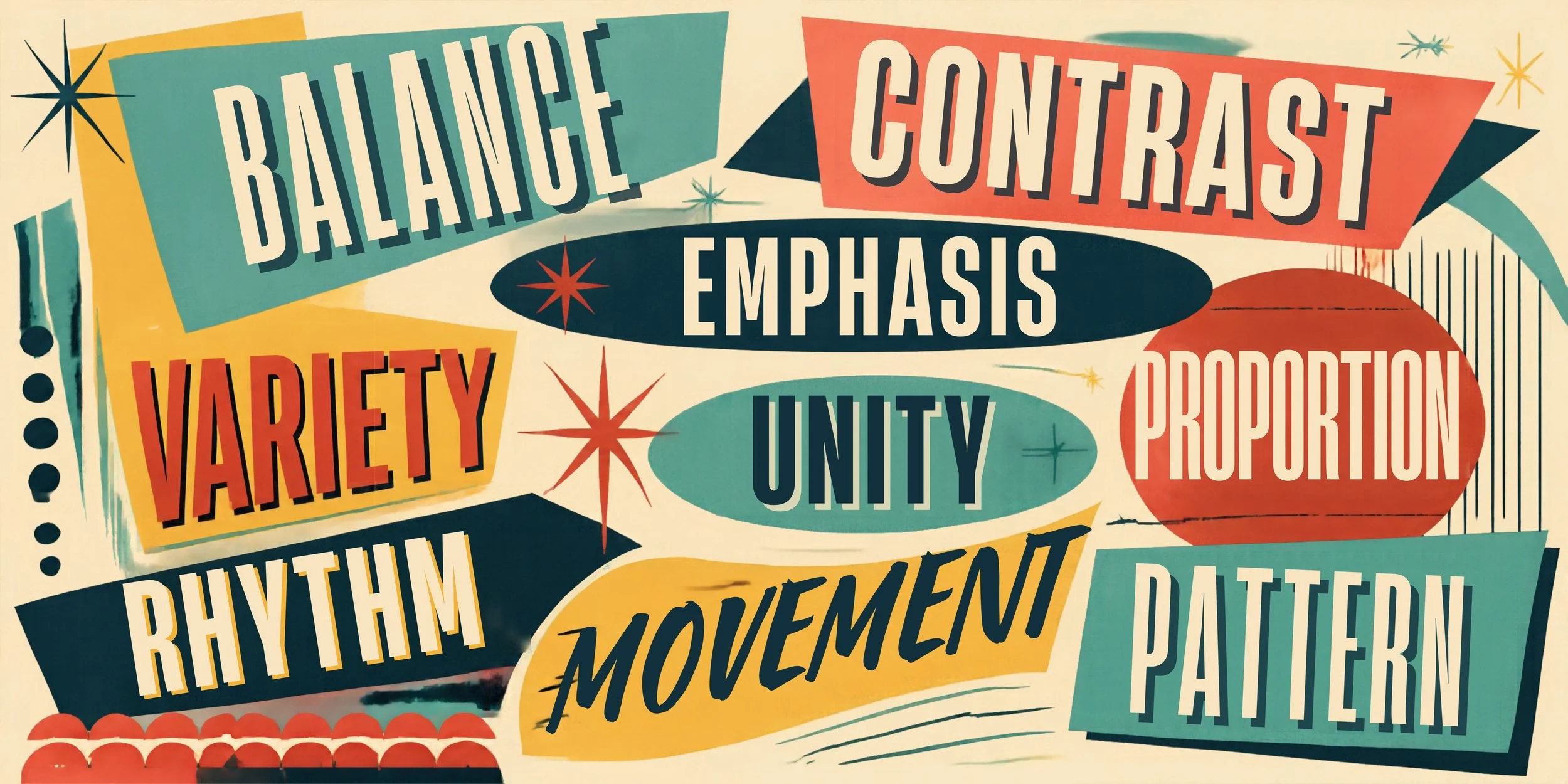
The Principles of Design: The Artist's Strategy If the elements are your ingredients, the principles of design are your recipes. The principles of design—such as balance, contrast, rhythm, unity, and emphasis—are the guidelines for how you organize the seven elements on your canvas.
You might have beautiful colors and interesting shapes, but without a strong design principle to anchor them, the composition falls apart. For example, you can manipulate Value (an element) to create high Contrast and Emphasis (principles) that immediately draw the viewer to the focal point of your painting. You can use repeating Lines (element) to establish a sense of Rhythm (principle) across a coastal scene.
Why Manipulation Matters The true power of an artist lies not just in rendering an object accurately, but in manipulating these elements and principles to tell a specific story. An effective painter knows when to break up a rigid form to create movement, or how to push the values in a background to create deeper atmospheric space. Mastering this visual organization is what guides your viewer's eye exactly where you want it to go, creating the emotional impact that turns a casual viewer into a dedicated collector.
Click through the slideshow above to see exactly how these concepts are applied in practice, complete with visual examples of how adjusting just one element can change the entire feeling of a piece.