
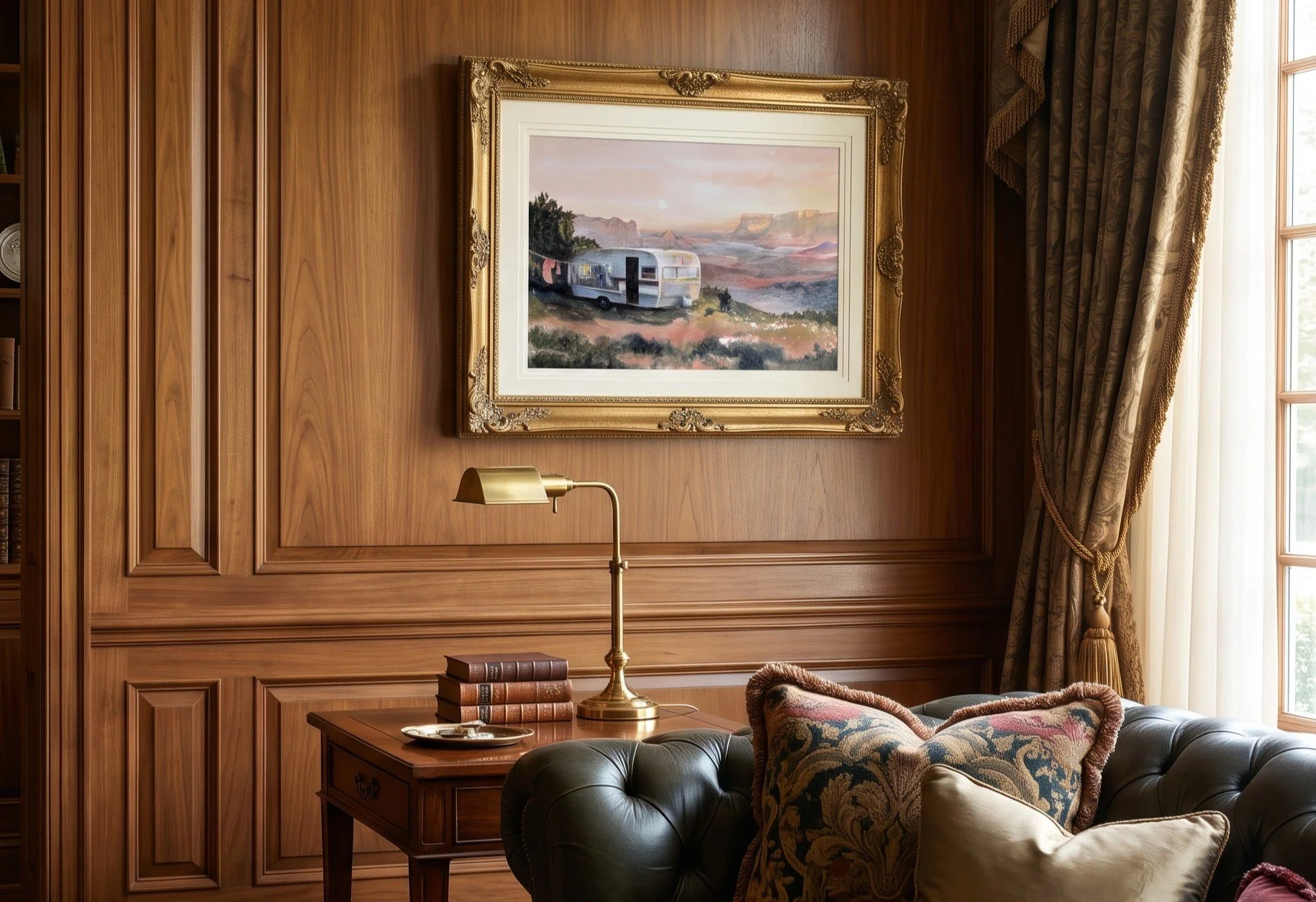
A good frame can capture the mood of your home or office decor. Framed Watercolor Painting: Living The Dream (18 x 24) watercolor, Bruce Black.
I have vivid memories of going to gallery openings with my grandparents in Old Down Scottsdale, Arizona. They were avid watercolor collectors and enjoyed meeting the artists and filling their home with beautiful original works of art. I now own several of those paintings and they are just as beautiful today as they were then. Collecting watercolor art offers a quiet magic that no other medium can replicate. The way pigment blooms across wet paper, the luminous glow of the white page shining through transparent washes, and the unforgiving honesty of every brushstroke make an original watercolor painting a remarkable testament to an artist’s mastery.
Whether you are purchasing your first work on paper or curating a sophisticated collection of Southwest and coastal landscapes, buying watercolor requires a slightly different eye—and specific archival care—compared to oil paintings. Here are ten essential tips for collecting original watercolor art with confidence.
1. Look for 100% Cotton Archival Paper
The longevity of any fine art watercolor begins with its foundation. Wood-pulp paper contains natural acids that yellow and grow brittle over time. Always verify that a painting is executed on 100% cotton rag paper (typically 140 lb / 300 gsm cold-press or heavier, such as Arches). Museum-grade cotton paper is naturally acid-free, holds rich pigment granulation, and can last for centuries without degrading.
2. Ask About Artist-Grade, Lightfast Pigments
Not all watercolor paints are formulated for collectors. Student-grade paints rely on fugitive dyes and fillers that fade quickly under indoor light. Professional, artist-grade watercolors use pure mineral and synthetic pigments rated for ASTM I or II lightfastness. When buying original watercolor paintings, ask the artist or gallery about their pigment standards—serious watercolorists build their palettes specifically for archival permanence.
3. Study How the Artist Preserves the "Whites"
In oil painting, white is applied as an opaque layer at the end of the process. In traditional transparent watercolor, the brightest highlights are the untouched white of the paper itself. Notice how the artist plans around those luminous whites—whether it is sunlight hitting desert sandstone or glare off coastal water. Clean, intentional white space is one of the surest hallmarks of technical control.
4. Invest in UV-Protective Museum Glass
Because watercolors are delicate works on paper, they require glazing. Standard picture glass will not block ultraviolet rays from dulling transparent washes over time. Always choose UV-filtering conservation glass or museum glass. Museum glass adds an anti-reflective coating that eliminates glare, allowing the subtle tonal shifts of the painting to read clearly from any angle in the room.
5. Insist on Acid-Free Matting for Air Circulation
An original watercolor painting should never press directly against glass. Temperature shifts can cause microscopic condensation inside the frame, leading to paper buckling, mold, or pigment lifting onto the glass. Pair your watercolor with an acid-free, archival cotton rag mat (a crisp white mat with a generous 3-inch border in a classic gold or silver wood frame elevates both modern and traditional interiors) to create a protective air gap.
6. Choose the Right Wall for Hanging Watercolor Art
Even behind UV-protective glazing, direct sunlight is the primary enemy of works on paper. Hang your watercolor paintings on interior walls that receive soft, indirect natural light or warm, balanced gallery lighting. Avoid high-humidity spaces like bathrooms or walls directly above kitchen ranges, where moisture fluctuations can cause the paper to ripple inside the frame.
7. Verify Originals vs. Giclée Prints
High-resolution giclée prints on textured cotton paper can look convincing behind glass. Before you buy, confirm whether you are acquiring a one-of-a-kind original watercolor or a limited-edition reproduction. Look closely at an original and you will often see subtle organic cues a printer cannot replicate: gentle cockling where heavy washes dried, faint graphite underdrawing, crisp edge blooms, and varied pigment settling into the grain of the paper.

Find the perfect watercolor painting for your home or office decor. Original watercolor landscape by Bruce Black.
8. Value Freshness and Spontaneity
Oil paint can be scraped down and reworked indefinitely; transparent watercolor is largely unforgiving. A master watercolorist knows when to guide the water and when to step back and let gravity and pigment do the work. Seek out paintings with fresh, confident, single-pass washes and connected dark values rather than muddy, overworked passages. That sense of immediacy is what gives great watercolor its lasting energy.
9. Buy Directly from Working Artists and Trusted Galleries
Collecting fine art becomes far more meaningful when you understand the vision behind the brush. Follow artists whose work resonates with you, read their studio journals, or inquire directly through their website. Acquiring work directly from a studio artist—or a reputable gallery representing them—gives you direct provenance, transparency on archival materials, and framing guidance tailored to your space.
10. Collect What Moves You
Interior design trends shift, but a painting that genuinely stirs something in you will anchor a room for decades. Whether it is the warm, atmospheric light of an Arizona desert dusk or the quiet solitude of a coastal shoreline, trust your response. If a painting pulls you back for a second and third look, it belongs in your collection.
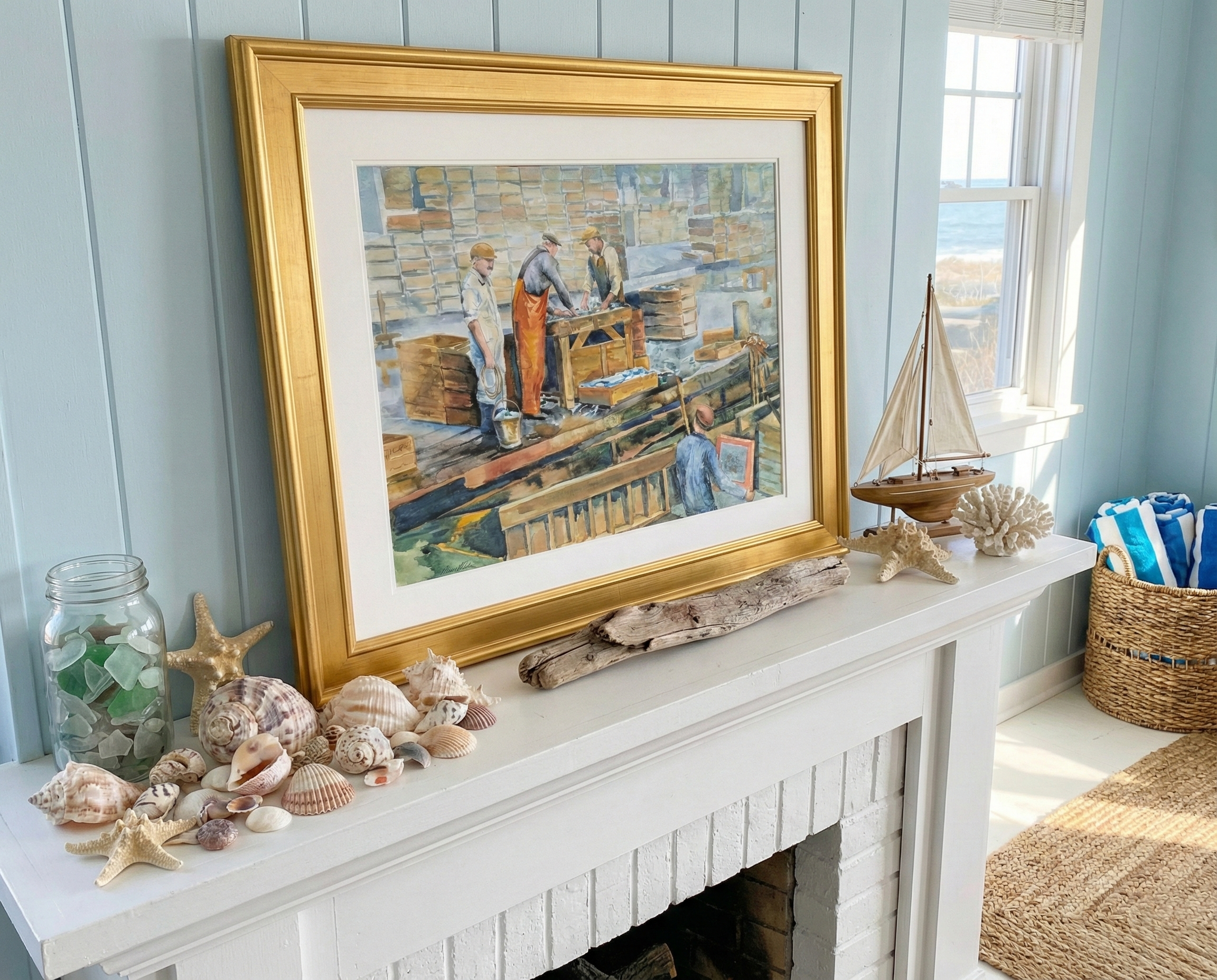
Add found elements of your region around a framed watercolor painting to establish the feel of the room. Here is a framed coastal painting surrounded by seashells and beach finds. Artwork by Bruce Black.
Frequently Asked Questions About Collecting Watercolor Art
Do original watercolor paintings fade over time?
Not when created and framed properly. Original watercolors painted with artist-grade, lightfast pigments on 100% cotton paper—and framed behind UV-protective glass away from direct sunlight—retain their vibrancy for generations.
How should a watercolor painting be framed?
Use an acid-free 4-ply or 8-ply cotton rag mat to keep the paper separated from the glass, archival hinging tape on the backing board, and UV-filtering conservation or museum glass.
Are original watercolors a good fit for luxury interiors?
Yes. Framed with a generous white archival mat and a refined wood or gold plein air frame, original watercolors bring light, warmth, and bespoke texture to Southwestern, coastal, and classic traditional spaces.
Explore Original Watercolor Paintings
Ready to add an archival work on paper to your home or design project? Browse my current collection of Original Southwest & Coastal Watercolor Paintings or contact the studio for private viewing, framing advice, and interior designer trade inquiries.
For further research, visit the Smithsonian Museum Conservation Institute’s article on Caring for Your Paintings.
